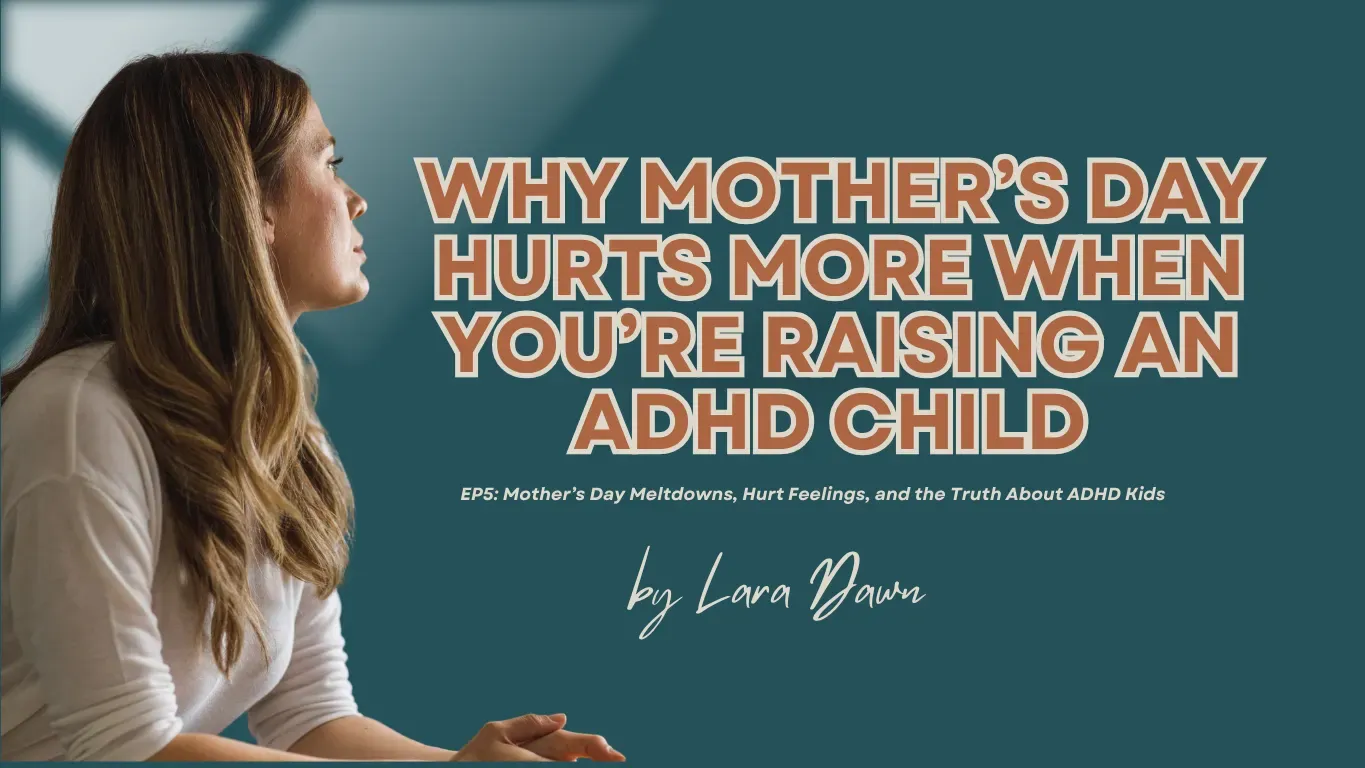
The Mother’s Day Nobody Talks About...
May 19, 2026Mother’s Day is supposed to feel magical.
The breakfast trays.
The flowers.
The handmade cards.
The smiling family photos flooding social media.
But for many mothers raising neurodivergent children, Mother’s Day can quietly hurt.
Not because our children don’t love us.
But because love does not always look the way we expected it to.
One mother in my community shared a story that broke my heart.
Her daughter was excited for Mother’s Day. She picked flowers. Made cards. Showered her mom with affection.
But her son with ADHD ignored the day completely.
He was irritable.
Withdrawn.
Demanding.
Disconnected.
The mother felt crushed.
Until she later discovered what had actually happened beneath the surface.
At school, her son had tried to make the perfect Mother’s Day card. But perfectionism overwhelmed him. Nothing felt “good enough.” Eventually, frustrated and ashamed, he ripped the card apart and threw it in the garbage.
On Mother’s Day morning, he woke up already emotionally overloaded.
The excitement.
The pressure.
The comparison with his sister.
The fear of disappointing his mom.
It became too much for his nervous system to hold.
So instead of becoming vulnerable, he became distant.
Not because he didn’t love her.
Because he cared so deeply.
This is what so many parents miss about ADHD children.
What looks like anger, avoidance, indifference, or disrespect is often emotional overwhelm underneath.
Behavior is communication.
And when we begin parenting the nervous system instead of only reacting to behavior, everything changes.
But this episode is not only about our children.
It’s also about us.
Because parenting neurodivergent children has a way of exposing the emotional wounds we carry ourselves.
The fear of not being enough.
The fear of rejection.
The need to feel appreciated.
The pressure to be perfect.
Many mothers unknowingly carry invisible “scripts” about what love should look like and how children should express it.
So when our child melts down on a special day, forgets something important, or reacts differently than expected, it touches something much deeper than the moment itself.
And suddenly parenting feels heavy.
This is why emotional intelligence matters so much.
Not just for our children.
For us.
Because when mothers become more emotionally regulated, self-aware, and compassionate with themselves, the entire family dynamic shifts.
That is exactly why I created my 21-Day Emotional Intelligence Challenge.
This experience is designed to help mothers:
• understand emotional triggers
• regulate their nervous systems
• deepen connection with their children
• stop taking behavior so personally
• parent from a calmer, more empowered place
Not through perfection.
Through evolution.
If this article spoke to your heart, I invite you to listen to the full episode of The evOLVED Brain: EP5: Mother’s Day Meltdowns, Hurt Feelings, and the Truth About ADHD Kids
🎧 Episode 5 dives deeper into:
• ADHD and emotional sensitivity
• parenting and nervous system regulation
• healing motherhood wounds
• expectations and emotional overwhelm
• self-compassion for mothers
And if you’re ready to begin transforming your emotional world alongside your parenting journey, join the 21-Day Emotional Intelligence Challenge.
Because your child is not trying to hurt you.
And you deserve compassion too.