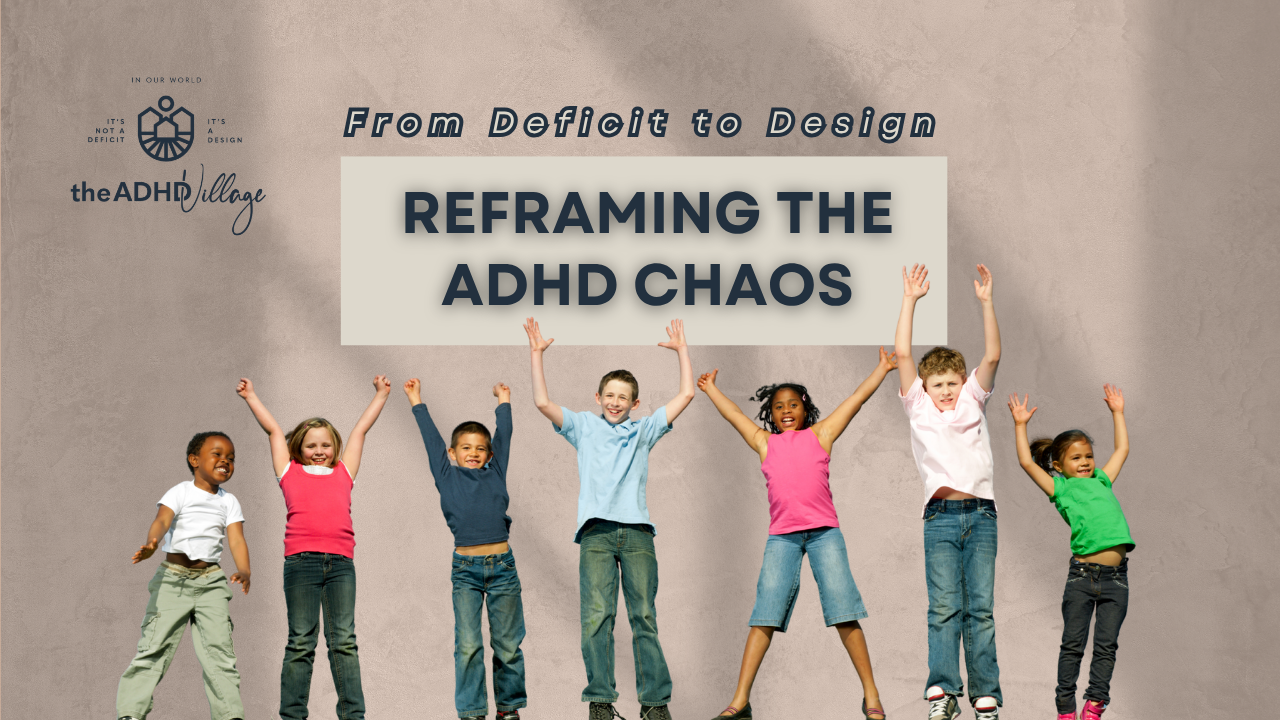
From Deficit to Design: Reframing the Chaos
Apr 07, 2026The Reality No One Wants to Admit
There was a time when raising children with ADHD—while navigating my own—felt like I was drowning. Not "struggling." Drowning.
It wasn’t just the big emotions or the sibling explosions. It was the crushing weight of Rejection Sensitive Dysphoria (RSD). Every school call felt like an indictment. Every judgmental look from a stranger felt like a jury delivering a "guilty" verdict on my parenting.
I spent years asking: Is this my fault?
So when people say, “ADHD is a superpower,” it doesn’t just feel wrong—it feels like a gaslight. Because when you’re staring at a pile of unpaid bills, a crying child, and a brain that won't stop screaming, "superpower" is the last word you'd use.
The Statistical Weight of a "Mismatched" Brain
Let’s be honest: left unsupported, ADHD can be devastating. We have to acknowledge the hard data. Individuals with ADHD are statistically more likely to experience:
-
Financial Instability: High rates of debt and impulsive spending.
-
Physical Risk: Higher involvement in car accidents and substance use.
-
Emotional Toll: Chronic anxiety, depression, and low self-worth.
-
Relational Strain: Friction in marriages and parenting.
This isn't because we are "broken." It’s because we are navigating a world designed for linear, "slow-dopamine" brains. We are trying to run high-performance software on 40-year-old hardware.
It’s Not a Superpower—It’s a High-Octane Design
ADHD is not a superpower by default. It is a specific neurological design. Imagine being given a high-performance jet engine and being told to use it to drive to the grocery store. It’s loud, it’s expensive to fuel, it’s impossible to park, and it scares the neighbors.
Does that make the engine "bad"? No. It makes the environment wrong for the design.
When I stopped trying to "fix" the brain and started looking at the Design vs. Environment collision, everything shifted.
From Friction to Flow
ADHD is a brain that:
-
Seeks Novelty: It dies in the mundane.
-
Feels Deeply: Its emotional volume is turned to 11.
-
Responds to Environment: It absorbs the energy of the room.
-
Resists Suppression: The harder you push, the more it pushes back.
The "ruining my life" feeling comes when we try to force this design into a box of "compliance" and "quiet." But when we change the support system, the results change:
The shift isn't about changing the child; it’s about changing the path.
What True Support Looks Like
Instead of focusing on behavior modification (which is just painting over rust), we focus on Nervous System Architecture:
-
Dopamine Management: Working with the brain’s reward system, not against it.
-
Connection Over Compliance: Realizing that a regulated nervous system is a prerequisite for a focused mind.
-
Environment Design: Creating spaces that minimize "friction" and maximize "flow."
You Aren't Failing—You're Just Mismatched
If ADHD feels like it’s ruining your life right now, hear this: You are not a bad parent, and your child is not a "problem." You are likely trying to use a map for a city you aren't living in.
Over the next few weeks, we are going to dive deep into how we move from Chaos to Regulation. We are moving away from the "Deficit" model and moving toward a "Design" model.
I’ll be going even deeper into these strategies inside my Telegram channel. For the unfiltered version of this journey, join us here:
Join the Conversation on Substack
I want to hear your story, but more importantly, I want us to learn from each other.
Leave a comment on this post on Substack: What is the single biggest "friction point" in your house right now?
-
Is it the morning routine?
-
The constant homework battles?
-
The feeling that you—or your child—are always "too much"?
I read every comment on the platform. Let’s stop talking about "fixing" and start talking about design.